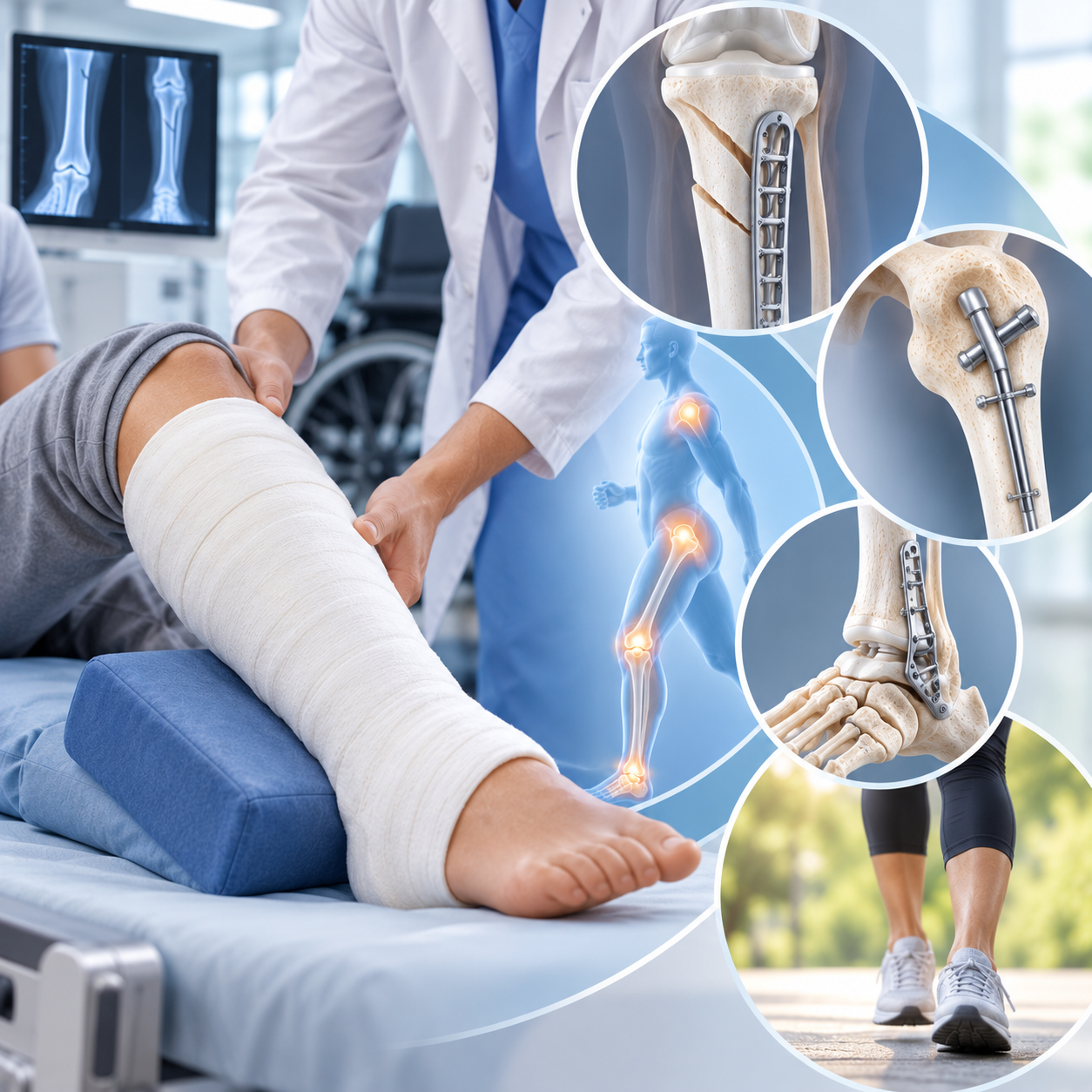
Comprehensive Bone Fracture and Orthopaedic Trauma Care by Dr. Girish Dhanawat
Bone fractures and traumatic injuries can occur unexpectedly due to road accidents, falls, sports injuries or other incidents. These injuries may cause severe pain, swelling, deformity and difficulty moving the affected body part.
While some fractures heal with immobilisation and appropriate non-surgical care, others require surgical treatment to restore bone alignment, stabilise the injury and support proper healing.
Trauma and fracture surgery in Thane involves evaluating and treating broken bones, complex fractures, joint injuries and associated soft-tissue damage. Treatment may include casting, fracture reduction, internal fixation using plates and screws, intramedullary nailing or external fixation, depending on the injury.
Dr. Girish Dhanawat, an Orthopedic Surgeon and Joint Replacement Specialist in Thane, provides orthopaedic evaluation and treatment planning for patients with fractures and musculoskeletal injuries.
His approach focuses on accurate diagnosis, appropriate fracture management, restoration of bone alignment and structured rehabilitation to help patients recover mobility and function.
Whether you have sustained a fracture following a fall, experienced a road traffic accident or require evaluation for a complex bone injury, timely orthopaedic assessment can help determine the most suitable treatment.
Book a Trauma & Fracture ConsultationWhat Is Trauma & Fracture Surgery?
Trauma and fracture surgery is a specialised area of orthopaedics that focuses on treating broken bones, joint injuries and musculoskeletal damage caused by accidents or physical trauma.
A fracture occurs when a bone breaks due to an external force, repeated stress or an underlying condition that weakens the bone.
Fractures can range from small, stable cracks to severe injuries in which the bone breaks into several pieces or damages surrounding tissues.
The main objectives of trauma and fracture treatment are to:
- Restore appropriate bone alignment
- Stabilise fractured bones
- Support natural bone healing
- Reduce pain and improve comfort
- Protect surrounding muscles, nerves and blood vessels
- Restore joint movement and stability
- Prevent avoidable long-term complications
- Help patients return to daily activities
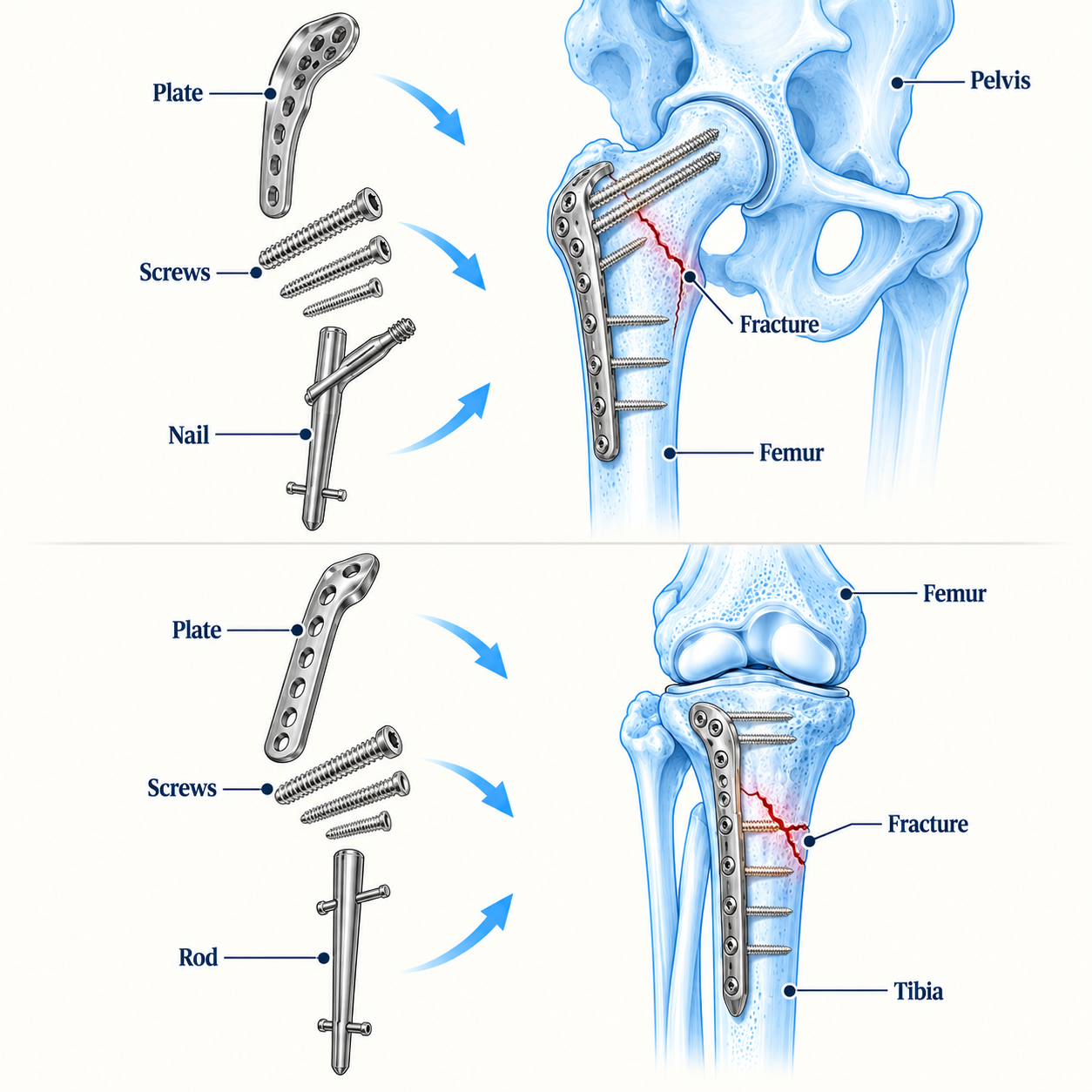
Not every fracture requires surgery. Many stable fractures can be treated with casts, splints or braces.
However, displaced, unstable, open or complex fractures may require surgical fixation to achieve appropriate alignment and stability.
The choice of treatment depends on the affected bone, fracture pattern, soft-tissue injury, patient's age, bone quality and overall medical condition.
Common Causes of Bone Fractures and Orthopaedic Trauma
Bone fractures can occur in people of all ages. The severity of injury depends on the mechanism of trauma, bone strength and other individual factors.
1. Road Traffic Accidents
Road accidents involving cars, motorcycles, bicycles or pedestrians can cause high-energy injuries.
These may include fractures of the thigh bone, shin bone, pelvis, arms or other skeletal structures.
Severe accidents may also damage surrounding muscles, ligaments, nerves and blood vessels.
2. Falls and Slip Injuries
Falls are a common cause of fractures, especially among older adults.
A fall onto an outstretched hand may cause a wrist fracture, while a fall onto the hip may lead to a hip fracture.
Age-related changes in bone density can increase fracture risk.
3. Sports Injuries
Sports involving running, jumping, collisions or sudden changes in direction can cause fractures and joint injuries.
Common examples include ankle fractures, wrist fractures, shoulder injuries and fractures associated with contact sports.
4. Workplace and Industrial Accidents
Falls from heights, heavy equipment injuries and crushing accidents can result in complex fractures.
These injuries may involve multiple bones and significant soft-tissue damage.
5. Osteoporosis-Related Fractures
Osteoporosis reduces bone strength, increasing the likelihood of fractures following relatively minor trauma.
Common sites include the hip, wrist and spine.
Treatment may involve both management of the fracture and evaluation of underlying bone health.
6. Repetitive Stress Injuries
Repeated loading of a bone can cause small cracks known as stress fractures.
These injuries may affect athletes, runners or individuals who suddenly increase their physical activity.
Most stress fractures are treated non-surgically, although selected high-risk injuries may require surgery.
7. Direct Impact or Trauma
A direct blow from an object, collision or physical injury can cause a bone to fracture.
The resulting fracture may be simple or complex depending on the force and location of impact.
Types of Bone Fractures
Fractures are classified according to their pattern, alignment, severity and whether surrounding tissues are affected.
1. Closed Fracture
A closed fracture occurs when a bone breaks without an associated opening in the skin.
The fracture may be stable or displaced, and treatment depends on the degree of damage.
2. Open Fracture (Compound Fracture)
An open fracture occurs when a broken bone communicates with the outside environment through a wound.
These injuries carry an increased risk of infection and require urgent hospital assessment.
Treatment commonly involves antibiotics, wound cleaning, surgical debridement and fracture stabilisation.
3. Displaced Fracture
A displaced fracture occurs when broken bone fragments move out of their normal alignment.
Some displaced fractures can be repositioned without surgery, while others require surgical fixation.
4. Comminuted Fracture
A comminuted fracture occurs when a bone breaks into three or more fragments.
These injuries are often associated with significant trauma and may require advanced fixation techniques.
5. Intra-Articular Fracture
An intra-articular fracture extends into a joint surface.
Accurate assessment and restoration of joint alignment are important because untreated joint irregularities may contribute to stiffness and post-traumatic arthritis.
6. Stress Fracture
A stress fracture develops due to repetitive loading rather than a single major injury.
Treatment generally focuses on reducing stress on the affected bone and allowing appropriate healing.
7. Fragility Fracture
A fragility fracture occurs following low-energy trauma, often in individuals with osteoporosis.
These fractures commonly affect the hip, wrist, spine and upper arm.
8. Nonunion or Malunion Fracture
Nonunion occurs when a fracture fails to heal as expected.
Malunion occurs when the bone heals in an incorrect position.
Selected cases may require corrective surgery, bone grafting or revision fixation.
Common Fractures Treated in Orthopaedic Trauma Care
Different fractures require different treatment approaches depending on their location and severity.
1. Hip Fractures
Hip fractures are particularly common among older adults following falls.
Patients may experience severe hip pain, difficulty standing or inability to bear weight.
Depending on the fracture type, treatment may involve:
- Internal fixation with screws
- Dynamic hip screw fixation
- Intramedullary nailing
- Partial or total hip replacement in selected cases
The treatment aims to stabilise the injury and help patients regain mobility.
2. Femur Fractures
A femur fracture affects the thigh bone, one of the strongest bones in the body.
These fractures often result from high-energy trauma in younger patients or low-energy falls in patients with weakened bones.
Many adult femoral shaft fractures require surgical fixation using an intramedullary nail or another appropriate implant.
3. Tibia and Fibula Fractures
The tibia and fibula are the two bones of the lower leg.
Fractures may occur following road accidents, falls, sports injuries or direct trauma.
Treatment options include casting, intramedullary nailing, plate fixation or external fixation.
4. Ankle Fractures
Ankle fractures may involve one or more bones forming the ankle joint.
Symptoms include pain, swelling, bruising and difficulty standing or walking.
Unstable or displaced fractures may require fixation with plates and screws to restore joint alignment.
5. Wrist and Distal Radius Fractures
Wrist fractures frequently occur when someone falls onto an outstretched hand.
Treatment may involve a splint, cast, fracture reduction or surgical fixation with a plate and screws.
6. Shoulder and Proximal Humerus Fractures
Fractures near the shoulder can occur following falls, sports injuries or accidents.
Some fractures can be treated with a sling and rehabilitation, while displaced or complex injuries may require surgery.
7. Forearm Fractures
Fractures of the radius or ulna may affect forearm rotation and arm function.
In adults, displaced fractures involving the shafts of both bones often require accurate reduction and internal fixation.
8. Pelvic and Acetabular Fractures
Pelvic fractures may result from severe trauma or fragility-related falls.
Certain injuries can involve significant internal bleeding, requiring emergency trauma care.
Complex pelvic and acetabular fractures may require specialist surgical management at an appropriately equipped centre.
9. Clavicle Fractures
Collarbone fractures commonly occur after falls onto the shoulder or direct impact.
Many heal without surgery, although selected displaced or unstable fractures may benefit from surgical fixation.
10. Multiple or Complex Fractures
Some patients sustain injuries involving several bones or joints.
These injuries require a coordinated approach involving fracture stabilisation, assessment of associated injuries and rehabilitation planning.
Symptoms of a Bone Fracture
Fracture symptoms vary according to the location and severity of injury.
Common symptoms include:
- Sudden pain following an injury
- Swelling around the affected area
- Bruising or tenderness
- Visible deformity or abnormal alignment
- Difficulty moving the injured limb
- Pain when standing or bearing weight
- Reduced joint movement
- An unusual sensation or sound at the time of injury
- Numbness or tingling if nerves are affected
- An open wound near the suspected fracture
Some fractures may produce relatively mild symptoms, particularly stress fractures and certain non-displaced fractures.
An orthopaedic evaluation is important when symptoms suggest a possible broken bone.
Emergency warning signs: Seek immediate emergency care if there is an open fracture, significant bleeding, a cold or pale limb, loss of sensation, severe deformity or rapidly worsening pain and swelling.
How Are Bone Fractures Diagnosed?
Accurate diagnosis is essential for determining whether a fracture can heal with non-surgical treatment or requires operative fixation.
1. Clinical Examination
Dr. Girish Dhanawat evaluates the patient's symptoms, injury history, swelling, deformity and ability to move the affected part.
The examination may include assessment of circulation, nerve function and surrounding soft tissues.
2. X-Ray Examination
X-rays are commonly the first imaging investigation used to diagnose fractures.
They help identify:
- Location of the fracture
- Number of bone fragments
- Degree of displacement
- Bone alignment
- Involvement of nearby joints
3. CT Scan
A CT scan may be recommended for complex fractures, particularly those involving joint surfaces, the pelvis or multiple bone fragments.
It provides detailed information that can assist surgical planning.
4. MRI Scan
MRI may be useful when a fracture is not clearly visible on initial X-rays or when associated ligament, cartilage or soft-tissue injuries are suspected.
5. Additional Medical Investigations
Blood tests and other investigations may be required before surgery, depending on the patient's condition and the nature of the injury.
Patients with fragility fractures may also benefit from osteoporosis evaluation.
Treatment Options for Trauma and Fractures
Fracture treatment depends on the affected bone, stability, alignment and injury severity.
1. Non-Surgical Fracture Treatment
Some fractures heal successfully without surgery.
Non-operative treatment may include:
Casting and Splinting
A cast or splint holds the injured bone in a stable position while healing occurs.
Bracing
A brace provides support while allowing selected controlled movements when appropriate.
Closed Reduction
Closed reduction involves repositioning displaced bone fragments without making a surgical incision.
Activity and Weight-Bearing Restrictions
Patients may need temporary support using crutches, a walker or other aids.
Physiotherapy
Rehabilitation helps restore movement and strength once it is safe to begin.
2. Open Reduction and Internal Fixation (ORIF)
Open Reduction and Internal Fixation is a surgical procedure used to realign and stabilise broken bones.
During surgery, the orthopaedic surgeon accesses the fracture, restores alignment and secures the fragments using implants such as plates and screws.
ORIF may be considered for:
- Displaced fractures
- Unstable fractures
- Selected fractures extending into joints
- Fractures that cannot maintain alignment in a cast
- Certain complex injuries
The implants hold the bone fragments in position while natural healing takes place.
3. Intramedullary Nailing
Intramedullary nailing involves placing a metal rod inside the central canal of a long bone.
It is commonly used for selected fractures of the femur and tibia.
The nail stabilises the fracture and helps maintain alignment during healing.
4. External Fixation
External fixation uses pins inserted into the bone and connected to a supporting frame outside the body.
It may be used for:
- Severe open fractures
- Significant soft-tissue injuries
- Selected unstable fractures
- Temporary stabilisation following major trauma
- Situations requiring staged surgical treatment
The external fixator may be temporary or definitive, depending on the injury.
5. Percutaneous Fracture Fixation
Certain fractures can be stabilised using screws, pins or other implants inserted through relatively small incisions.
The suitability of this technique depends on fracture pattern and the ability to achieve appropriate alignment.
6. Bone Grafting and Revision Fracture Surgery
Some fractures fail to unite or heal in an incorrect position.
Selected patients may require revision fixation, bone grafting or corrective osteotomy to improve stability and promote healing.
7. Fracture Treatment with Joint Replacement
Certain fractures, particularly displaced femoral neck fractures in older adults, may be treated with partial or total hip replacement rather than conventional fixation.
The choice depends on age, mobility, fracture characteristics and overall health.
How Is Fracture Surgery Performed?
Fracture surgery generally follows a structured process, although emergency injuries may require additional procedures and specialist care.
Step 1: Initial Trauma Assessment
The treating team evaluates the patient's overall condition and checks for associated injuries.
For major trauma, stabilisation of breathing, circulation and other potentially life-threatening problems takes priority.
Step 2: Fracture Evaluation and Imaging
X-rays or other appropriate imaging studies are used to assess fracture location, displacement and severity.
The surgeon evaluates surrounding tissues, circulation and nerve function.
Step 3: Surgical Planning
The surgeon determines whether the fracture requires immediate surgery, temporary stabilisation or planned fixation.
The selection of implants and technique depends on the fracture pattern and patient condition.
Step 4: Anaesthesia and Preparation
The patient receives appropriate anaesthesia.
The surgical team follows infection-prevention procedures and prepares the affected area.
Step 5: Fracture Reduction
The broken bone fragments are carefully repositioned to restore appropriate alignment.
This may be performed through an incision or by indirect techniques, depending on the operation.
Step 6: Fracture Fixation
The surgeon stabilises the fracture using suitable implants, which may include:
- Plates
- Screws
- Intramedullary nails
- Pins or wires
- External fixation devices
The fixation method is selected according to the injury.
Step 7: Alignment and Stability Assessment
The surgeon checks the position of the bone and implants, often using intraoperative imaging.
The aim is to achieve stability while protecting surrounding structures.
Step 8: Wound Closure and Postoperative Monitoring
The surgical wound is closed when appropriate, and the patient is monitored after the procedure.
Open fractures and injuries with significant tissue damage may require additional wound procedures.
Step 9: Rehabilitation and Follow-Up
Rehabilitation begins when medically appropriate.
Follow-up assessments help monitor fracture healing, implant stability and recovery of movement.
Non-Surgical vs Surgical Fracture Treatment
| Feature | Non-Surgical Treatment | Surgical Treatment |
|---|---|---|
| Common suitability | Stable, well-aligned fractures | Unstable, displaced or selected complex fractures |
| Treatment method | Casts, splints or braces | Plates, screws, nails or external fixators |
| Bone alignment | Maintained by immobilisation, sometimes after closed reduction | Restored and stabilised using fixation techniques |
| Anaesthesia | May be needed for reduction | Generally required |
| Wound | Usually no surgical incision | Surgical incision or pin sites may be required |
| Recovery | Depends on fracture and immobilisation | Depends on fracture, fixation and rehabilitation |
| Main consideration | Maintaining alignment during healing | Surgical risks and achieving stable fixation |
Neither approach is suitable for every fracture. The decision depends on the patient's clinical condition and the characteristics of the injury.
Benefits of Fracture Surgery
For appropriately selected patients, surgery may offer important advantages.
Restoration of Bone Alignment
Surgical fixation helps reposition displaced bones and restore appropriate anatomical alignment.
Improved Fracture Stability
Implants can maintain bone position while healing occurs.
Restoration of Joint Function
Accurate reduction of certain fractures involving joints may help preserve movement and reduce long-term functional limitations.
Support for Earlier Rehabilitation
Stable fixation may permit earlier controlled movement in selected patients, although weight-bearing restrictions may still be required.
Management of Complex Fractures
Surgical procedures can help treat injuries that are difficult to manage with casting or bracing alone.
Reduced Risk of Selected Complications
Appropriate fracture fixation may reduce the risk of certain alignment-related problems in selected cases.
However, surgery does not eliminate the possibility of infection, stiffness, nonunion or other complications.
Recovery After Trauma & Fracture Surgery
Recovery after fracture surgery varies considerably depending on the injured bone, fracture severity, fixation method and patient's general health.
First 24–48 Hours
The initial postoperative period focuses on:
- Pain management
- Monitoring circulation and nerve function
- Wound assessment
- Swelling control
- Prevention of avoidable complications
- Safe mobilisation when medically appropriate
First 2 Weeks
Patients may need a cast, splint, brace, walker or crutches depending on the fracture.
The main priorities include wound care, prescribed medication, follow-up and protection of the injured bone.
Weeks 3–6
Bone healing progresses gradually.
Selected patients may begin or advance controlled joint movement and muscle exercises under medical guidance.
Weight-bearing restrictions may continue.
Weeks 6–12
Many uncomplicated fractures show substantial healing during this period, although not all injuries heal within 12 weeks.
Follow-up X-rays may be used to assess progress and determine whether activity can be increased.
Three to Six Months
Patients with more significant fractures may continue rehabilitation to improve strength, joint movement and functional independence.
Some return to work and daily routines during this period, depending on the demands of their activities.
Long-Term Recovery
Complex fractures, open injuries and fractures involving joints may require six months to a year or longer for functional recovery.
Fracture healing and recovery of normal strength do not always occur at the same time.
Important: Patients should not resume full weight-bearing, sports or strenuous exercise solely on the basis of a general recovery timeline. Clearance should come from the treating surgeon.
Precautions After Fracture Surgery
Following postoperative instructions helps protect the fracture and support recovery.
Patients may be advised to:
- Take prescribed medicines as directed
- Keep the wound or dressing clean and dry
- Avoid placing weight on the injured limb until permitted
- Use walking aids when recommended
- Attend scheduled follow-up appointments
- Perform prescribed physiotherapy exercises
- Avoid smoking and nicotine exposure, which can interfere with bone healing
- Maintain adequate nutrition
- Avoid falls and additional injuries
- Report unusual symptoms promptly
Seek urgent medical attention if you experience severe or rapidly increasing pain, worsening swelling, loss of sensation, a cold or pale limb, fever with wound discharge, chest pain or sudden breathlessness.
How Long Does a Bone Fracture Take to Heal?
The healing period varies according to the location and type of fracture.
Some uncomplicated fractures heal in approximately 6–8 weeks, while others require several months or longer.
Factors that influence healing include:
- Age of the patient
- Fracture location and severity
- Blood supply to the injured bone
- Open or closed nature of the injury
- Stability of fracture fixation
- Bone density and overall bone health
- Smoking or nicotine use
- Diabetes or other medical conditions
- Nutritional status
- Infection or associated tissue damage
In some situations, delayed union or nonunion can occur.
Regular follow-up allows the orthopaedic surgeon to evaluate healing progress and adjust the recovery plan when necessary.
What Is the Cost of Trauma & Fracture Surgery in Thane?
The cost of trauma and fracture surgery in Thane depends on the nature of the injury, complexity of treatment and hospital requirements.
Type and Severity of Fracture
A straightforward fracture requiring fixation may involve different costs from a complex fracture involving multiple bones or joint surfaces.
Surgical Procedure
Costs vary depending on whether treatment involves plates and screws, intramedullary nailing, external fixation or revision surgery.
Implant Selection
Different implant materials, designs and manufacturers may have different costs.
Hospital Facilities
Hospital category, room type, operating theatre charges and duration of admission influence the total expense.
Emergency or Complex Trauma Care
Major trauma requiring urgent intervention, intensive monitoring or multiple specialists may involve additional costs.
Diagnostic Investigations
X-rays, CT scans, MRI scans and preoperative investigations may contribute to the overall cost.
Surgeon and Anaesthesia Charges
Professional fees depend on the procedure and treatment setting.
Physiotherapy and Rehabilitation
Postoperative rehabilitation, medication, follow-up imaging and additional treatment requirements may affect expenses.
Insurance Coverage
Many medically necessary fracture treatments may qualify for insurance coverage, subject to policy terms, exclusions, limits and approval requirements.
A personalised cost estimate can be discussed after evaluation and confirmation of the proposed treatment plan.
Patients should clarify whether the estimate includes implants, investigations, hospitalisation, medicines and follow-up care.
Why Consult Dr. Girish Dhanawat for Trauma & Fracture Surgery in Thane?
Choosing an orthopaedic surgeon for fracture treatment involves understanding the injury, available management options and rehabilitation requirements.
Orthopaedic Evaluation and Treatment Planning
Dr. Girish Dhanawat, MBBS, D. Ortho., is an Orthopedic Surgeon and Joint Replacement Specialist in Thane who provides evaluation for bone, joint and musculoskeletal conditions.
Individualised Fracture Assessment
Every fracture is different.
Treatment planning takes into account the fracture location, severity, bone quality, soft-tissue condition and patient's functional requirements.
Surgical and Non-Surgical Treatment Options
Patients can receive guidance regarding immobilisation, fracture reduction, surgical fixation and other appropriate treatment pathways.
Focus on Bone Alignment and Healing
Fracture management aims to restore alignment, maintain stability and support natural healing.
Patient Education and Communication
Patients are guided through their diagnosis, treatment alternatives, expected healing period and rehabilitation requirements.
Rehabilitation and Follow-Up Guidance
Recovery planning focuses on regaining movement, strength and functional independence while protecting the healing fracture.
Complex injuries requiring specialist trauma facilities or multidisciplinary management should be referred to an appropriately equipped hospital when necessary.
When Should You Consult a Fracture Specialist in Thane?
Consult an orthopaedic fracture specialist if you experience:
- Severe pain following an injury
- Persistent swelling or bruising
- Difficulty standing or bearing weight
- Restricted movement of a joint or limb
- Visible deformity after an accident
- Persistent pain despite initial treatment
- A previously diagnosed fracture that is not healing as expected
- Recurrent pain around an old fracture
- Concerns about bone alignment after a fracture
- Difficulty regaining movement after immobilisation

Do not delay emergency treatment for major injuries, open fractures, suspected fractures with impaired circulation or sensation, or other potentially serious trauma.
For stable injuries and follow-up care, an orthopaedic consultation can help determine the most appropriate treatment and recovery plan.
Frequently Asked Questions About Trauma & Fracture Surgery in Thane
What is trauma and fracture surgery?
Trauma and fracture surgery involves treating broken bones, joint injuries and musculoskeletal damage caused by accidents or other physical injuries. Treatment may include fracture reduction, casting, internal fixation or external fixation.
When is fracture surgery necessary?
Fracture surgery may be recommended when broken bones are significantly displaced, cannot remain aligned with casting, involve unstable joints or require surgical stabilisation for appropriate healing.
What is ORIF surgery?
ORIF stands for Open Reduction and Internal Fixation. It is a procedure in which broken bone fragments are repositioned and secured with implants such as plates and screws.
What is the difference between an open and a closed fracture?
An open fracture involves a wound communicating with the broken bone and carries a higher infection risk. A closed fracture occurs without such an opening in the skin.
Is fracture surgery painful?
Anaesthesia is used to manage pain during surgery. Postoperative discomfort is common and is treated with appropriate medication, immobilisation and rehabilitation measures.
How many days of hospitalisation are required?
Hospital stay varies by fracture type, surgery and patient health. Some patients may be discharged within one or two days, while complex trauma cases can require substantially longer admission.
How long does a fracture take to heal?
Many uncomplicated fractures heal over approximately 6–12 weeks. However, healing time varies widely, and complex fractures may require several months or longer.
Can a fracture heal without surgery?
Yes. Stable fractures with acceptable alignment can often heal successfully with immobilisation and appropriate follow-up.
What implants are used in fracture surgery?
Common implants include metal plates, screws, intramedullary nails, pins and wires. External fixation devices may also be used for selected injuries.
Do plates and screws need to be removed after healing?
Not always. Many implants can remain in place permanently. Removal may be considered when implants cause symptoms, interfere with function or create other clinical concerns.
Can elderly patients undergo fracture surgery?
Yes. Many older adults undergo surgery for fractures, particularly hip fractures. Suitability depends on the type of injury, medical fitness and expected benefits.
What happens if a fracture does not heal properly?
Delayed healing, nonunion or malunion may require further assessment. Some patients need additional immobilisation, bone-health treatment, revision fixation or bone grafting.
Is physiotherapy necessary after fracture surgery?
Physiotherapy is often important for restoring joint movement, muscle strength, balance and everyday function. The programme depends on fracture healing and surgical recommendations.
Where can I consult a fracture specialist in Thane?
Patients can consult Dr. Girish Dhanawat at his clinic in Naupada, Thane West, for orthopaedic assessment, fracture management advice and appropriate treatment planning. Major or emergency trauma injuries should be evaluated at an emergency department.
Consult Dr. Girish Dhanawat for Trauma & Fracture Surgery in Thane
Dr. Girish Dhanawat provides personalised orthopaedic consultations for patients with fractures, joint injuries and other musculoskeletal conditions in Thane.
From fracture assessment and treatment planning to rehabilitation guidance and follow-up, the focus is on helping patients understand their condition and work towards safe functional recovery.
Dr. Girish Dhanawat, MBBS, D. Ortho.
Orthopedic Surgeon & Joint Replacement Specialist
Clinic Address: 1st Floor, Office No. 5, Lokmanya Co-Operative Housing Society, 6, Veer Savarkar Marg, Near Gajanan Maharaj Mandir, Naupada, Thane West, Maharashtra – 400602.
Contact: +91 9004700318
Book Your Trauma & Fracture Consultation