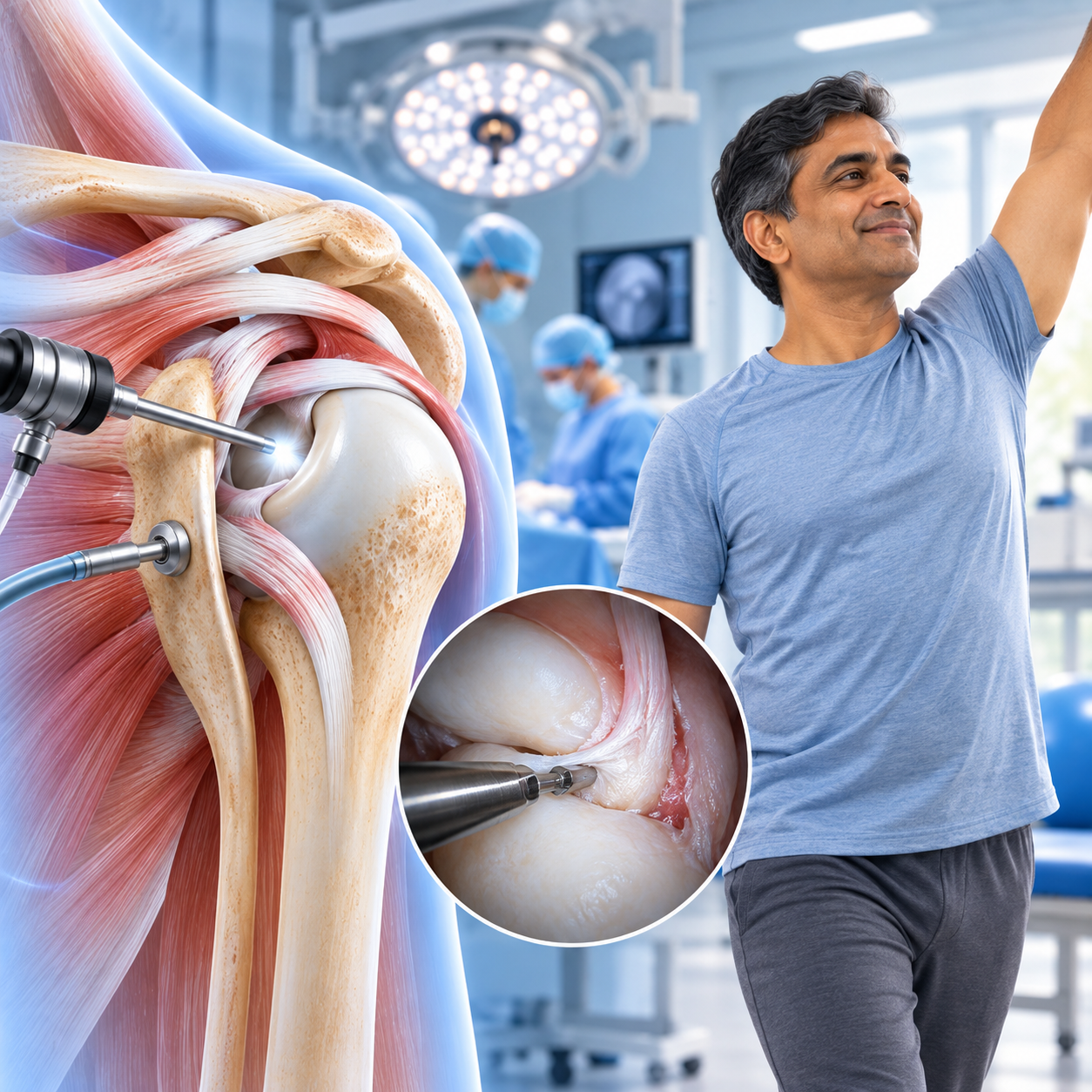
Minimally Invasive Shoulder Surgery for Rotator Cuff Tears, Labral Injuries and Shoulder Instability
Shoulder pain can make everyday activities difficult. Simple movements such as lifting your arm, reaching overhead, getting dressed or sleeping comfortably may become painful when the shoulder joint is injured.
Persistent shoulder discomfort can develop due to sports injuries, rotator cuff tears, repeated shoulder dislocations, labral damage or other conditions affecting the tissues around the joint.
Shoulder arthroscopy surgery in Thane is a minimally invasive surgical technique used to examine and treat selected shoulder joint conditions through small incisions using a specialised camera and instruments.
Dr. Girish Dhanawat, an Orthopedic Surgeon and Joint Replacement Specialist in Thane, provides orthopaedic assessment and treatment planning for shoulder pain, joint injuries and musculoskeletal conditions.
The aim of treatment is to identify the cause of shoulder pain, restore joint function, improve stability and help patients return to their daily activities.
Not every shoulder condition requires surgery. Many patients improve with medication, activity modification and physiotherapy. However, arthroscopic surgery may be considered when structural damage causes persistent symptoms or functional limitations despite appropriate non-surgical treatment.
If shoulder pain, weakness or instability is affecting your mobility or quality of life, a detailed orthopaedic consultation can help determine the most appropriate treatment.
Book a Shoulder Arthroscopy ConsultationWhat Is Shoulder Arthroscopy Surgery?
Shoulder arthroscopy is a minimally invasive orthopaedic procedure used to examine, diagnose and treat certain conditions inside the shoulder joint.
During the procedure, a small camera called an arthroscope is inserted through a small incision around the shoulder. The camera displays magnified images of the joint structures on a monitor.
Using these images, the surgeon can examine damaged tissues and perform appropriate treatment through additional small incisions with specialised instruments.
The procedure may be used to treat injuries involving:
- Rotator cuff tendons.
- Shoulder labrum.
- Joint capsule and ligaments.
- Certain cartilage abnormalities.
- Inflamed tissues within or around the joint.
- Selected conditions causing shoulder instability.
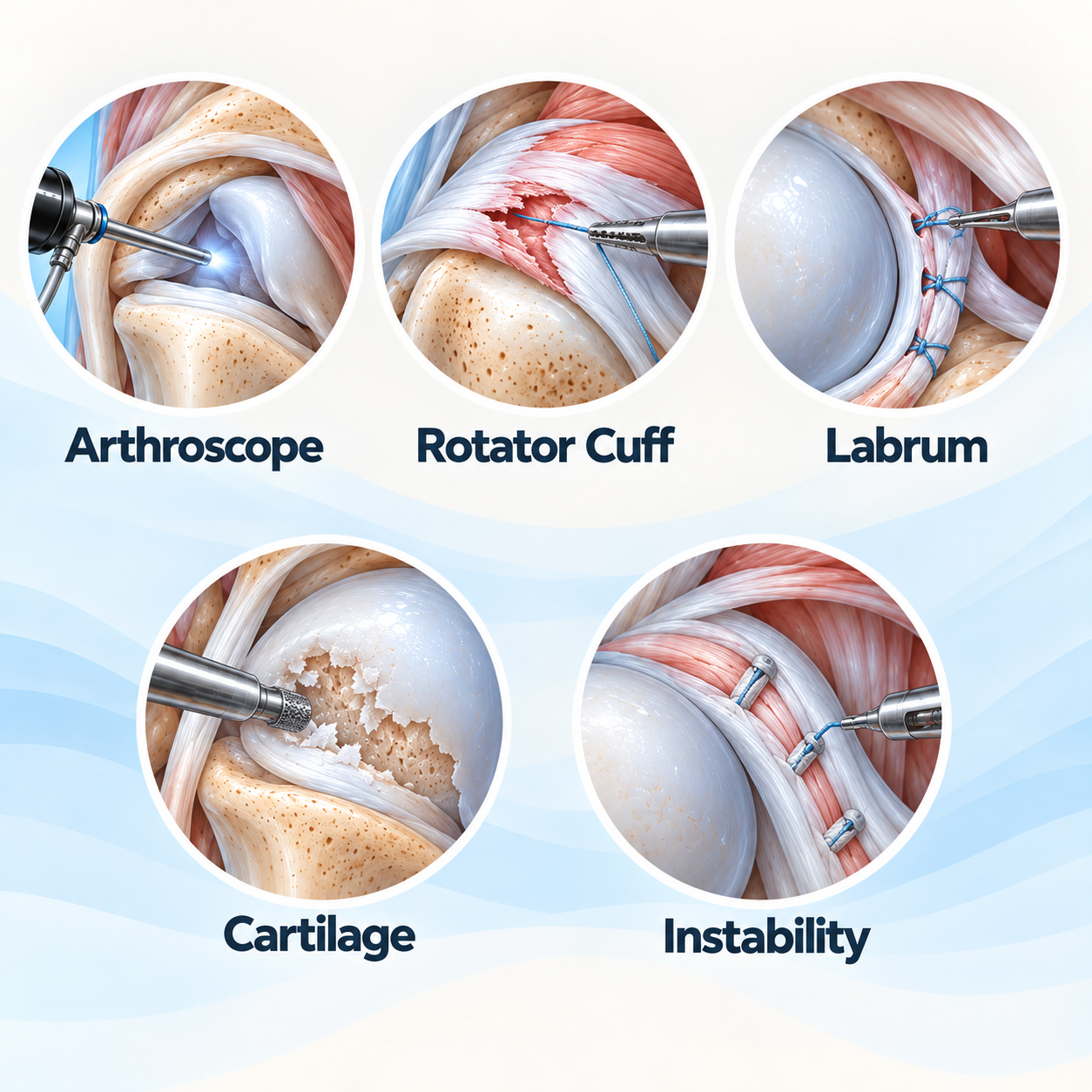
Compared with traditional open surgery, arthroscopy uses smaller incisions and may reduce disruption of surrounding soft tissues in appropriately selected patients.
However, recovery depends primarily on the condition treated and the type of repair performed. Even when small incisions are used, healing of repaired tendons or ligaments can take several months.
The main goals of shoulder arthroscopy are to:
- Treat suitable structural shoulder injuries.
- Reduce pain associated with the underlying condition.
- Improve shoulder stability.
- Restore functional shoulder movement.
- Support the recovery of strength and mobility.
- Help patients return to work, exercise and daily activities.
Understanding the Shoulder Joint
The shoulder is one of the most mobile joints in the human body. It allows the arm to move in several directions, including lifting, rotating, reaching and throwing.
The shoulder complex consists of several important structures.
Humerus
The humerus is the upper arm bone. Its rounded head forms the ball portion of the main shoulder joint.
Glenoid
The glenoid is a shallow socket located on the shoulder blade. It accommodates the humeral head to form the glenohumeral joint.
Rotator Cuff
The rotator cuff consists of four muscles and their tendons that help stabilise the shoulder and support arm movement.
Labrum
The labrum is a ring of fibrocartilage surrounding the shoulder socket. It helps deepen the socket and contributes to joint stability.
Ligaments and Joint Capsule
Ligaments and the joint capsule help maintain shoulder stability during movement.
Damage to these structures can cause pain, weakness, restricted movement or repeated episodes of shoulder instability.
Arthroscopy allows selected damaged structures to be visualised and treated using specialised surgical instruments.
Shoulder Conditions That May Require Arthroscopic Surgery
Several shoulder conditions can be evaluated for arthroscopic treatment. Surgery is generally considered according to symptoms, imaging findings, functional limitations and response to non-surgical care.
1. Rotator Cuff Tear
A rotator cuff tear occurs when one or more tendons supporting the shoulder become partially or completely torn.
It may develop following an injury, repetitive overhead activity or age-related tendon degeneration.
Common symptoms include:
- Pain while lifting the arm.
- Shoulder weakness.
- Difficulty reaching overhead.
- Night pain or discomfort while sleeping.
- Reduced shoulder movement.
- Pain while performing routine activities.
Small or less symptomatic tears may be managed without surgery.
Arthroscopic rotator cuff repair may be considered for selected symptomatic tears, particularly when there is significant weakness, a traumatic tear or persistent functional limitation.
During repair, the torn tendon may be reattached to the bone using specialised sutures and anchors.
2. Shoulder Labral Tear
The labrum is a ring of fibrocartilage that surrounds the shoulder socket and contributes to joint stability.
Labral tears can occur during sports injuries, falls, shoulder dislocations or repetitive overhead movements.
Symptoms may include:
- Deep shoulder pain.
- Clicking or catching sensations.
- Shoulder instability.
- Pain during overhead activities.
- Reduced strength or performance.
Certain symptomatic labral tears may require arthroscopic repair when appropriate non-surgical treatment does not provide sufficient relief.
3. Recurrent Shoulder Dislocation and Instability
Shoulder instability occurs when the humeral head moves excessively within the socket or partially or completely slips out of position.
Repeated dislocations can damage the labrum, ligaments and surrounding joint structures.
Patients may experience:
- Recurrent shoulder dislocations.
- A feeling that the shoulder may slip out.
- Pain during certain arm movements.
- Reduced confidence in overhead activity.
- Instability during sports or exercise.
Arthroscopic shoulder stabilisation may be considered for selected patients to repair damaged structures and improve joint stability.
4. Bankart Lesion
A Bankart lesion is an injury to the lower front portion of the shoulder labrum, commonly associated with anterior shoulder dislocation.
It can contribute to recurrent shoulder instability, particularly in younger and physically active patients.
Arthroscopic Bankart repair involves reattaching the damaged labrum and associated capsular structures to the shoulder socket using sutures and anchors.
However, patients with significant bone loss or complex instability may require a different surgical technique.
5. SLAP Tear
A SLAP tear affects the upper portion of the shoulder labrum near the attachment of the long head of the biceps tendon.
SLAP stands for Superior Labrum Anterior to Posterior.
These injuries may occur during throwing sports, weight training, falls or repetitive overhead activities.
Common symptoms include deep shoulder pain, clicking, weakness and discomfort during overhead movement.
Treatment depends on the patient's age, activity level, tear characteristics and associated shoulder conditions.
Selected cases may be managed with arthroscopic labral repair or a biceps tendon procedure.
6. Shoulder Impingement and Subacromial Bursitis
Shoulder impingement symptoms can occur when tissues around the rotator cuff become irritated during arm movement.
Patients may experience pain while reaching overhead, lifting objects or lying on the affected shoulder.
Most cases are initially treated with exercise-based rehabilitation, activity modification and appropriate pain management.
Arthroscopic procedures may be considered only for selected structural conditions after careful evaluation. Routine subacromial decompression is not recommended simply for persistent subacromial pain without a specific surgical indication.
7. Loose Bodies and Selected Cartilage Problems
Small fragments of bone or cartilage may occasionally become loose inside the shoulder joint.
These fragments can sometimes cause catching, locking, pain or restriction of movement.
Shoulder arthroscopy may be used to remove symptomatic loose bodies or address selected associated joint abnormalities.
Not every cartilage problem is suitable for arthroscopy, particularly when advanced shoulder arthritis is present.
Signs You May Need Shoulder Arthroscopy Surgery
Shoulder arthroscopy is not recommended solely because shoulder pain is present.
However, persistent symptoms associated with structural injury may require detailed orthopaedic evaluation.
Consult an orthopaedic specialist if you experience:
- Shoulder pain that persists despite appropriate treatment.
- Weakness while lifting or rotating the arm.
- Repeated shoulder dislocations.
- A feeling that the shoulder is unstable.
- Difficulty performing overhead activities.
- Pain that frequently interrupts sleep.
- Clicking or catching accompanied by pain or instability.
- Reduced shoulder movement following an injury.
- Difficulty returning to sports or physical activities.
- Persistent symptoms despite a structured rehabilitation programme.
These symptoms do not necessarily mean surgery is required.
A clinical examination and appropriate investigations can help identify the underlying condition and determine whether continued conservative treatment or surgery is suitable.
How Is a Shoulder Injury Diagnosed?
A detailed assessment helps determine whether shoulder arthroscopy may be beneficial.
Step 1: Medical History and Symptoms
The consultation begins with a discussion of shoulder pain, previous injuries, physical activities and functional difficulties.
The doctor may ask about the onset of symptoms, previous dislocations, night pain, weakness and previous treatments.
Step 2: Physical Examination
The shoulder is assessed for tenderness, muscle strength, range of movement and stability.
Special clinical tests may help identify possible rotator cuff injuries, labral problems or instability.
Step 3: Imaging Investigations
Imaging may be recommended depending on the clinical findings.
- X-rays: Help assess bone alignment, fractures, arthritis and other bony abnormalities.
- MRI: May help identify rotator cuff tears, labral injuries and damage to other soft tissues.
- MR Arthrography: An MRI performed after injection of contrast into the joint may be useful for selected suspected labral injuries.
- Ultrasound: Can help evaluate rotator cuff tendons and certain other soft-tissue conditions.
- CT Scan: May be recommended when shoulder instability involves suspected significant bone loss or complex bony abnormalities.
Not every patient requires every investigation.
Step 4: Treatment Planning
The diagnosis, symptoms, activity requirements and response to previous treatment are reviewed.
Treatment options may include continued rehabilitation, medication, injections for selected conditions or surgical treatment where appropriate.
How Is Shoulder Arthroscopy Surgery Performed?
Shoulder arthroscopy is performed in a hospital or appropriately equipped surgical facility using specialised instruments and a small camera.
The exact procedure depends on the shoulder condition and the tissues requiring treatment.
Step 1: Preoperative Assessment
Before surgery, the surgeon evaluates the shoulder, reviews imaging studies and assesses the patient's overall medical condition.
Blood investigations, anaesthesia assessment and other tests may be recommended when appropriate.
Step 2: Anaesthesia and Positioning
Shoulder arthroscopy may be performed using general anaesthesia, often combined with a regional nerve block for pain control.
The patient is positioned to allow safe access to the shoulder joint.
Common surgical positions include the beach-chair and lateral-decubitus positions.
Step 3: Small Arthroscopic Incisions
Small incisions, called portals, are created around the shoulder.
An arthroscope is inserted through one portal, allowing the surgeon to view the internal structures of the joint on a monitor.
Step 4: Examination of the Shoulder Joint
The surgeon examines the cartilage, labrum, tendons, ligaments and other relevant structures.
The findings help confirm the condition and guide the planned treatment.
Step 5: Treatment of Damaged Structures
Additional specialised instruments are introduced through small portals.
Depending on the diagnosis, treatment may include:
- Rotator cuff tendon repair.
- Labral repair.
- Bankart repair.
- Capsular stabilisation.
- Selected biceps tendon procedures.
- Removal of loose bodies.
- Treatment of selected inflamed or damaged tissues.
Sutures, anchors or other devices may be used when tissue repair is required.
Step 6: Closure and Postoperative Care
Once treatment is completed, the instruments are removed and the incisions are closed.
Dressings are applied, and a shoulder sling may be provided depending on the procedure.
Patients receive instructions about pain management, wound care, shoulder movement and rehabilitation.
Many shoulder arthroscopy procedures can be performed as day-care surgery, although admission requirements vary.
Potential Benefits of Shoulder Arthroscopy Surgery
Shoulder arthroscopy provides a minimally invasive method for treating selected shoulder conditions.
1. Smaller Surgical Incisions
Arthroscopy is performed through several small portals rather than a single larger incision used in conventional open procedures.
2. Reduced Soft-Tissue Disruption in Selected Procedures
The technique can allow access to damaged structures without extensively opening the joint.
3. Detailed Joint Visualisation
The arthroscope provides magnified images of internal joint structures, supporting assessment and precise treatment.
4. Targeted Treatment of Structural Injuries
Procedures such as rotator cuff repair, labral repair and selected stabilisation techniques can be performed arthroscopically when appropriate.
5. Potential for Earlier Discharge
Many patients can return home on the day of surgery, depending on the procedure and their medical condition.
6. Structured Functional Recovery
Postoperative rehabilitation supports the gradual restoration of shoulder movement, strength and stability.
The suitability and expected benefits of arthroscopy depend on the patient's diagnosis and the specific procedure performed.
Shoulder Arthroscopy vs Open Shoulder Surgery
Both arthroscopic and open surgery are established approaches for treating shoulder conditions.
The main difference is the surgical access used to reach the affected structures.
| Feature | Shoulder Arthroscopy | Open Shoulder Surgery |
|---|---|---|
| Incisions | Multiple small portals | Usually a larger incision |
| Visualisation | Camera-assisted magnified view | Direct surgical view |
| Soft-tissue handling | Often less extensive exposure | May involve greater exposure |
| Suitable conditions | Selected tendon, labral and instability injuries | Complex reconstructions and selected injuries |
| Hospital stay | Often day-care | Depends on procedure |
| Recovery | Depends on repair and rehabilitation | Depends on repair and rehabilitation |
| Long-term outcome | Depends on diagnosis and quality of repair | Depends on diagnosis and quality of repair |
Arthroscopy is not automatically superior for every shoulder condition.
The choice of procedure depends on the injury, anatomy, bone condition and surgical requirements.
Recovery After Shoulder Arthroscopy Surgery
Recovery after shoulder arthroscopy depends on the underlying condition, the surgical procedure, the extent of tissue repair and the patient's overall health.
Minor arthroscopic procedures may allow an earlier return to everyday activities, while rotator cuff or labral repairs often require several months of rehabilitation.
First 24–48 Hours
Patients are monitored following surgery and may be discharged on the same day when medically appropriate.
During this period, care generally focuses on:
- Managing postoperative discomfort.
- Protecting the operated shoulder.
- Following wound-care instructions.
- Wearing a shoulder sling when prescribed.
- Avoiding movements that may strain repaired tissues.
Patients should follow their surgeon's specific instructions regarding arm movement and sling use.
First 2 Weeks
The initial recovery period focuses on tissue protection and wound healing.
Patients may be advised to:
- Continue using the prescribed sling.
- Perform permitted hand, wrist and elbow movements.
- Begin approved gentle shoulder exercises when appropriate.
- Attend scheduled follow-up appointments.
- Avoid lifting or strenuous shoulder activities.
Shoulder movement restrictions depend on the type of repair performed.
Weeks 3–6
Rehabilitation may focus on gradually restoring permitted shoulder movement while protecting healing tissues.
Some patients begin supervised passive or assisted exercises during this stage.
Patients undergoing rotator cuff or labral repair may still require a sling or movement restrictions.
Weeks 6–12
Depending on the surgical procedure and healing progress, physiotherapy may gradually introduce:
- Active shoulder movements.
- Controlled strengthening exercises.
- Shoulder blade stabilisation exercises.
- Improved movement coordination.
- Functional exercises for everyday activities.
Strengthening is introduced according to the rehabilitation protocol and should not be rushed.
Months 3–6
Many patients progressively improve shoulder movement, strength and functional ability.
Rehabilitation may include:
- Progressive resistance exercises.
- Improved overhead movement.
- Work-related functional activities.
- Controlled sport-specific exercises.
- Gradual return to physical activity.
More demanding activities may require additional recovery time.
Long-Term Recovery
Full recovery after complex rotator cuff or shoulder stabilisation procedures may take six months or longer.
The timeline varies with the repair, tissue healing, rehabilitation progress and physical demands of the patient.
A structured physiotherapy programme and regular follow-up are important for functional recovery.
Physiotherapy After Shoulder Arthroscopy Surgery
Physiotherapy plays an important role in regaining shoulder movement, strength and stability following arthroscopic surgery.
The rehabilitation programme is selected according to the procedure performed and the patient's stage of recovery.
Restoring Shoulder Mobility
Controlled exercises help restore the movement needed for daily activities while protecting repaired structures.
Improving Muscle Strength
Progressive strengthening targets the rotator cuff, shoulder blade muscles and other muscles that support shoulder movement.
Improving Joint Stability
Patients recovering from shoulder instability procedures may require exercises that improve muscle control, coordination and dynamic joint stability.
Returning to Functional Activities
Rehabilitation gradually prepares patients for activities such as dressing, lifting, reaching, working and exercising.
Sport-Specific Rehabilitation
Athletes may require additional strengthening, endurance and movement-control exercises before returning to sports involving throwing, swimming, racket movements or weight training.
Return to sports should be based on clinical recovery, strength and functional assessment rather than a fixed timeline alone.
Who May Be Suitable for Shoulder Arthroscopy Surgery?
Shoulder arthroscopy may be considered for patients with structural shoulder conditions that are likely to benefit from surgical treatment.
Potential candidates include:
- Patients with symptomatic rotator cuff tears requiring repair.
- Individuals experiencing recurrent shoulder dislocations.
- Patients with selected symptomatic labral tears.
- Athletes with shoulder instability affecting performance.
- Patients with Bankart lesions causing repeated instability.
- Individuals with certain biceps-labral complex injuries.
- Patients with symptomatic loose bodies inside the shoulder joint.
- Individuals with persistent functional limitations associated with a surgically treatable shoulder condition.
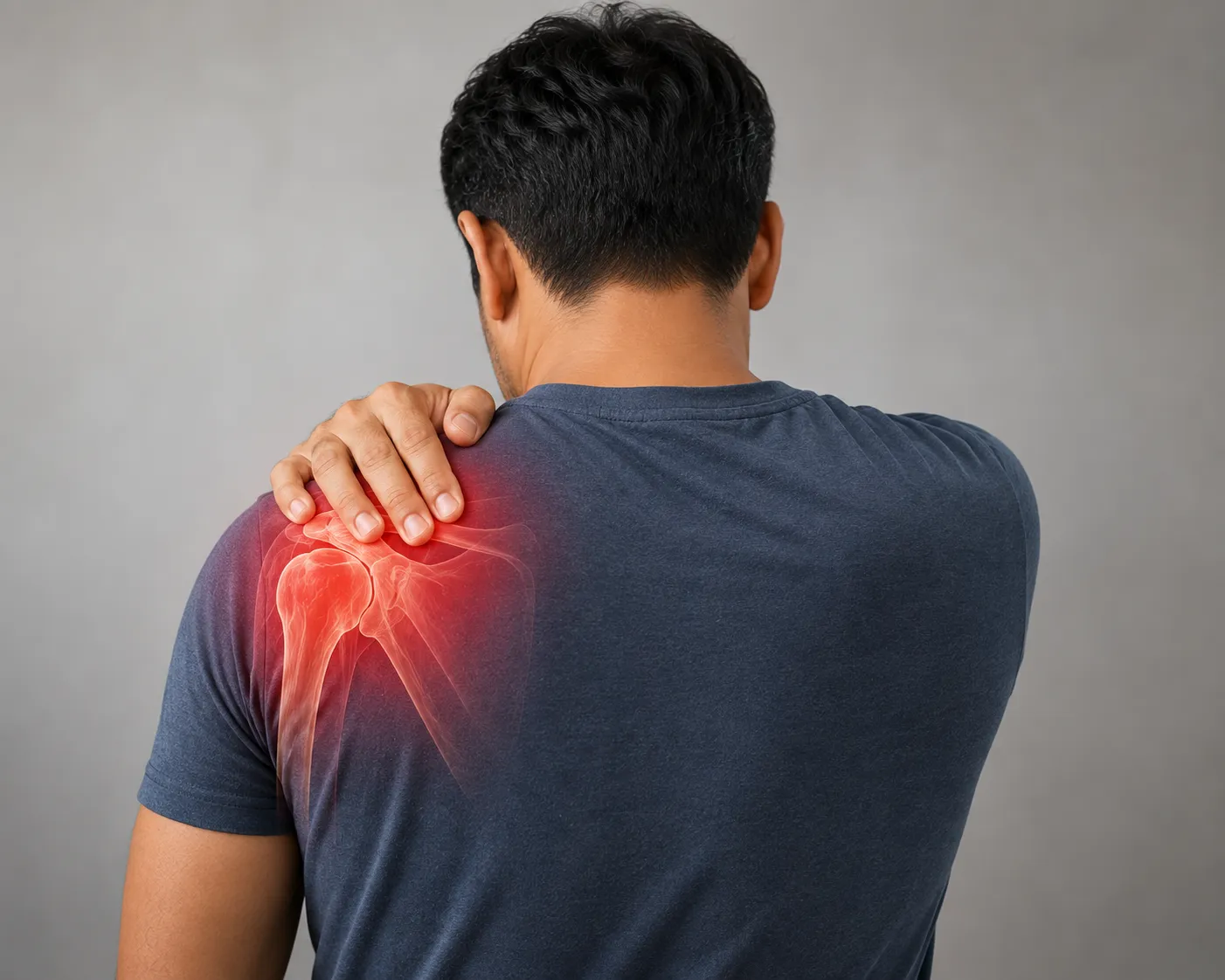
Not everyone with shoulder pain needs arthroscopic surgery.
Factors such as age, general health, activity requirements, injury severity, tissue quality and response to non-surgical treatment influence the decision.
What Is the Cost of Shoulder Arthroscopy Surgery in Thane?
The cost of shoulder arthroscopy surgery in Thane depends on the underlying condition, type of surgical repair, hospital facilities and individual treatment requirements.
Factors Affecting Shoulder Arthroscopy Surgery Cost
- Type of procedure: Rotator cuff repair, Bankart repair, labral repair and other arthroscopic procedures may have different costs.
- Extent of injury: Multiple damaged structures or complex repairs may require additional surgical resources.
- Suture anchors and implants: The number and type of fixation devices used may affect the total cost.
- Hospital facilities: Operating theatre charges, hospital category and room selection influence expenses.
- Anaesthesia: The anaesthesia technique and associated services contribute to the total cost.
- Diagnostic investigations: MRI, X-rays, blood tests and other necessary assessments may be included separately.
- Hospital stay: Day-care surgery and procedures requiring admission have different cost structures.
- Medication and postoperative care: Dressings, medicines and follow-up requirements may influence expenses.
- Physiotherapy: Rehabilitation may involve several sessions over weeks or months.
- Insurance coverage: Reimbursement depends on the policy terms, procedure and medical indication.
A personalised cost estimate can be discussed after clinical evaluation and selection of the appropriate treatment.
Patients should confirm hospital package inclusions and insurance eligibility before surgery.
Why Consult Dr. Girish Dhanawat for Shoulder Arthroscopy Surgery in Thane?
Orthopaedic and Arthroscopy Expertise
Dr. Girish Dhanawat, MBBS, D. Ortho., is an Orthopedic Surgeon and Joint Replacement Specialist in Thane. His official website identifies arthroscopy and sports injury treatment among his clinical specialisations.
Patients with shoulder pain, joint injuries and functional limitations can seek orthopaedic evaluation to understand their condition and treatment options.
Accurate Diagnosis and Individualised Assessment
Shoulder pain can arise from different causes, including tendon injuries, labral damage, joint instability, arthritis and conditions affecting nearby structures.
A thorough clinical evaluation helps identify the underlying condition before selecting treatment.
Appropriate Treatment Selection
Not every shoulder injury requires surgery.
Treatment planning considers non-surgical options such as medication, physiotherapy and activity modification alongside operative treatment when indicated.
Minimally Invasive Surgical Treatment Planning
Selected shoulder conditions can be treated through arthroscopic techniques.
Patients may discuss whether arthroscopy is appropriate for their diagnosis and whether the required procedure is available under Dr. Dhanawat's surgical care.
Personalised Rehabilitation Guidance
Functional recovery is an important part of treatment.
Rehabilitation recommendations are based on the injury, treatment performed, physical demands and individual recovery progress.
Patient-Centred Approach
Dr. Dhanawat's approach emphasises clear communication about orthopaedic conditions, available treatments and expected recovery.
This helps patients make informed decisions about their shoulder health.
Frequently Asked Questions About Shoulder Arthroscopy Surgery in Thane
What is shoulder arthroscopy surgery?
Shoulder arthroscopy is a minimally invasive procedure in which a small camera and specialised instruments are inserted through small incisions to examine and treat selected shoulder joint conditions. It may be used for rotator cuff tears, labral injuries and shoulder instability.
When is shoulder arthroscopy surgery recommended?
Shoulder arthroscopy may be recommended when a structural shoulder injury causes persistent pain, weakness or instability and is unlikely to improve sufficiently with non-surgical treatment. The decision depends on clinical examination, imaging findings and individual requirements.
Is shoulder arthroscopy a major surgery?
Shoulder arthroscopy is minimally invasive because it uses small incisions. However, the complexity depends on the procedure. A minor arthroscopic treatment may be relatively straightforward, while rotator cuff repair or shoulder stabilisation may require extensive tissue healing and rehabilitation.
How long does shoulder arthroscopy surgery take?
Many shoulder arthroscopy procedures take approximately one to two hours, although complex repairs may take longer. The exact duration depends on the structures being treated and the surgical technique.
How long does recovery take after shoulder arthroscopy?
Recovery varies according to the procedure. Minor procedures may allow a return to selected activities within weeks, while rotator cuff repairs and shoulder stabilisation procedures may require several months. Full functional recovery can take six months or longer in some cases.
Can a rotator cuff tear be repaired through shoulder arthroscopy?
Yes. Selected rotator cuff tears can be repaired arthroscopically using specialised sutures and anchors to reattach the tendon to the bone. Treatment depends on tear size, tissue quality, symptoms and functional requirements.
Can shoulder arthroscopy treat recurrent shoulder dislocation?
Yes. Selected patients with recurrent shoulder instability may benefit from arthroscopic stabilisation, such as Bankart repair. However, significant bone loss or complex instability may require alternative surgical techniques.
Is physiotherapy necessary after shoulder arthroscopy surgery?
Physiotherapy is important after many shoulder arthroscopy procedures, particularly when tendons or ligaments are repaired. Rehabilitation helps restore movement, strengthen supporting muscles and improve shoulder function.
When can I return to work or sports after shoulder arthroscopy?
The timeline depends on the procedure and activity demands. Some patients return to desk-based work relatively early, while jobs involving lifting and overhead movements may require longer recovery. Returning to competitive sports often takes several months and requires clinical clearance.
Where can I consult an orthopaedic surgeon for shoulder arthroscopy in Thane?
Patients can consult Dr. Girish Dhanawat, Orthopedic Surgeon and Joint Replacement Specialist, in Naupada, Thane West, for evaluation of shoulder pain, sports injuries and shoulder joint problems. The suitability and availability of a specific shoulder arthroscopy procedure should be confirmed during consultation.
Consult Dr. Girish Dhanawat for Shoulder Arthroscopy Surgery in Thane
Persistent shoulder pain, repeated dislocations or difficulty lifting your arm can interfere with work, exercise and everyday activities.
Dr. Girish Dhanawat provides individualised orthopaedic consultation in Thane for shoulder pain, joint injuries and musculoskeletal conditions.
Whether you are experiencing symptoms of a rotator cuff tear, labral injury, shoulder instability or another shoulder problem, a detailed assessment can help identify suitable treatment options.
Dr. Girish Dhanawat, MBBS, D. Ortho.
Orthopedic Surgeon & Joint Replacement Specialist in Thane
Clinic Address: 1st Floor, Office No. 5, Lokmanya Co-Operative Housing Society, 6, Veer Savarkar Marg, Near Gajanan Maharaj Mandir, Naupada, Thane West, Maharashtra – 400602.
Contact: +91 9004700318
Schedule Your Shoulder Consultation