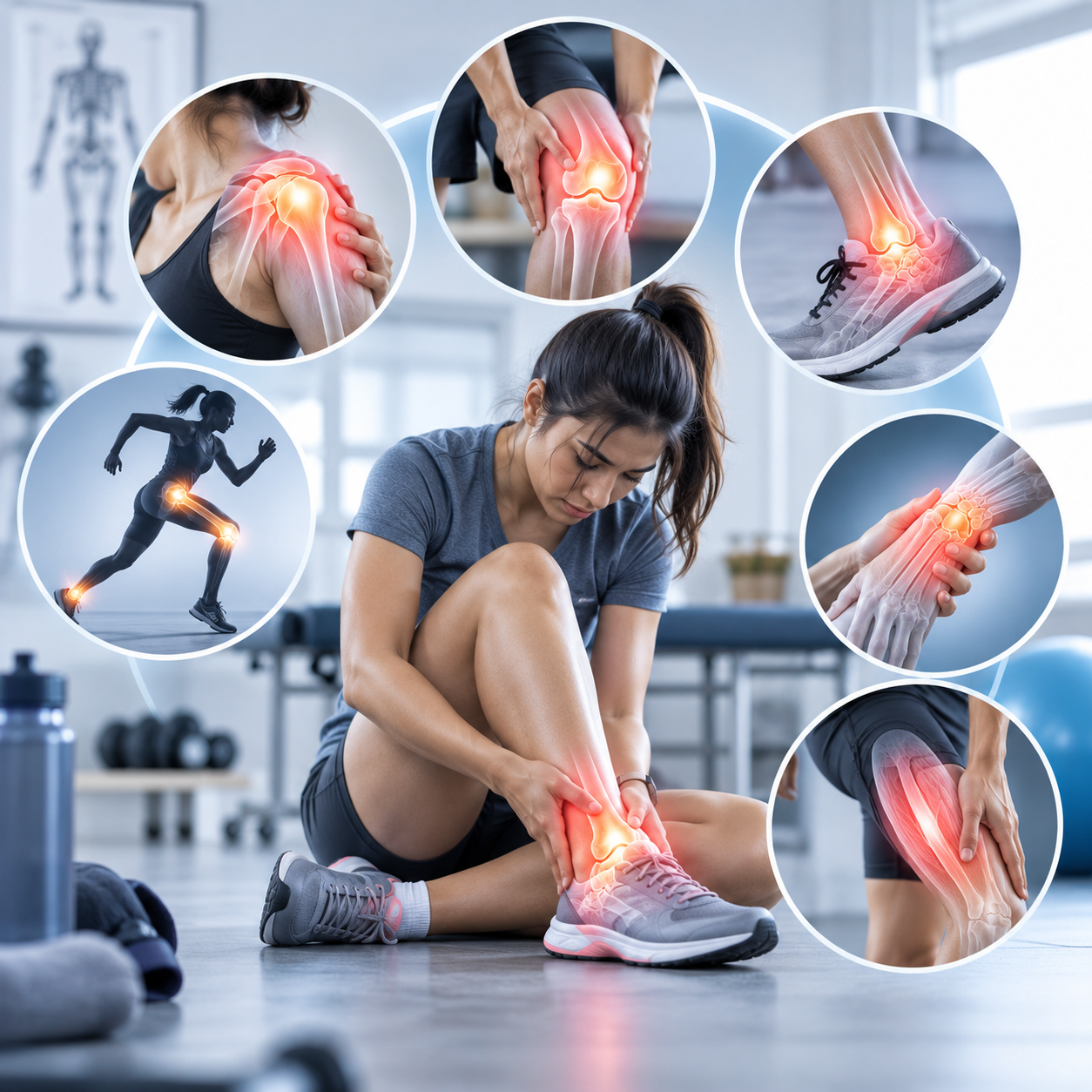
Diagnosis, Treatment and Rehabilitation for Sports-Related Injuries
A sudden twist while playing football, an awkward landing during badminton or persistent knee pain after running can affect more than your sporting performance. Sports injuries may interfere with walking, climbing stairs, exercising and even routine daily activities.
Sports injury treatment in Thane focuses on identifying the injured structures, reducing pain, restoring movement and helping patients return safely to their usual physical activities.
Dr. Girish Dhanawat, an Orthopedic Surgeon and Joint Replacement Specialist in Thane, provides individualised orthopaedic evaluation and treatment for musculoskeletal injuries affecting the knees, shoulders, ankles and other joints.
Sports injuries can involve muscles, ligaments, tendons, cartilage, bones and joints. Some injuries improve with rest, physiotherapy and appropriate rehabilitation, while others may require advanced investigations or surgical intervention.
Treatment decisions depend on the type of injury, its severity, the patient's activity level and their functional goals.
Whether you are a professional athlete, recreational sportsperson, gym enthusiast or someone who has developed an injury during everyday physical activity, timely medical evaluation can help prevent avoidable complications and support appropriate recovery.
Book a Sports Injury ConsultationWhat Are Sports Injuries?
Sports injuries are injuries affecting the muscles, bones, ligaments, tendons or joints during sports, exercise or other physical activities.
They may develop suddenly following an accident or gradually because of repeated physical stress.
Sports injuries are generally classified into two main categories.
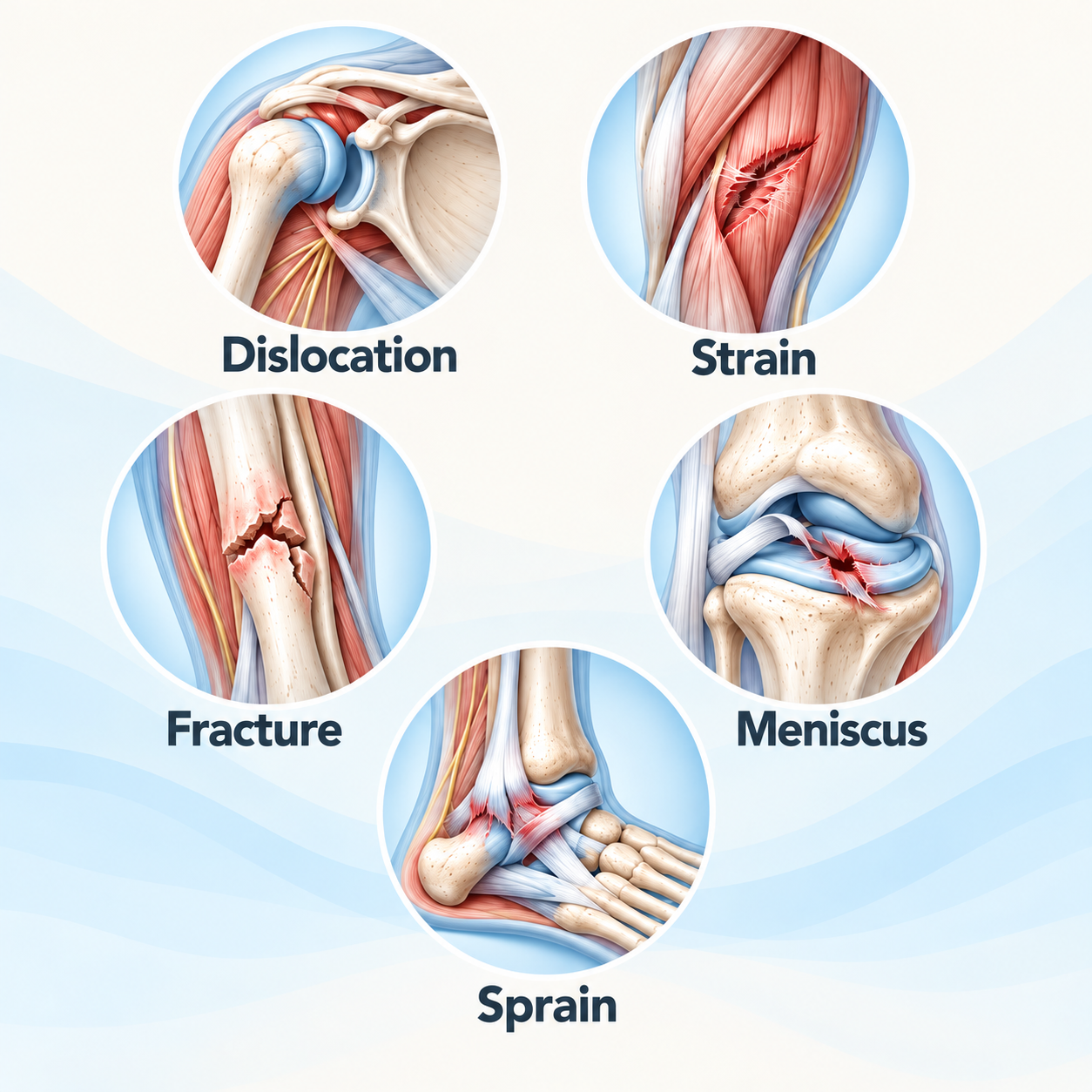
1. Acute Sports Injuries
Acute injuries occur suddenly, often during a specific movement, fall, collision or twisting incident.
Common examples include:
- Ankle sprains during football or running.
- ACL tears after sudden twisting or landing.
- Shoulder dislocations following a fall.
- Muscle strains during sprinting.
- Meniscus tears during rotational knee movements.
- Fractures caused by falls or direct impact.
Acute injuries may produce immediate pain, swelling, bruising or difficulty moving the affected body part.
2. Overuse Sports Injuries
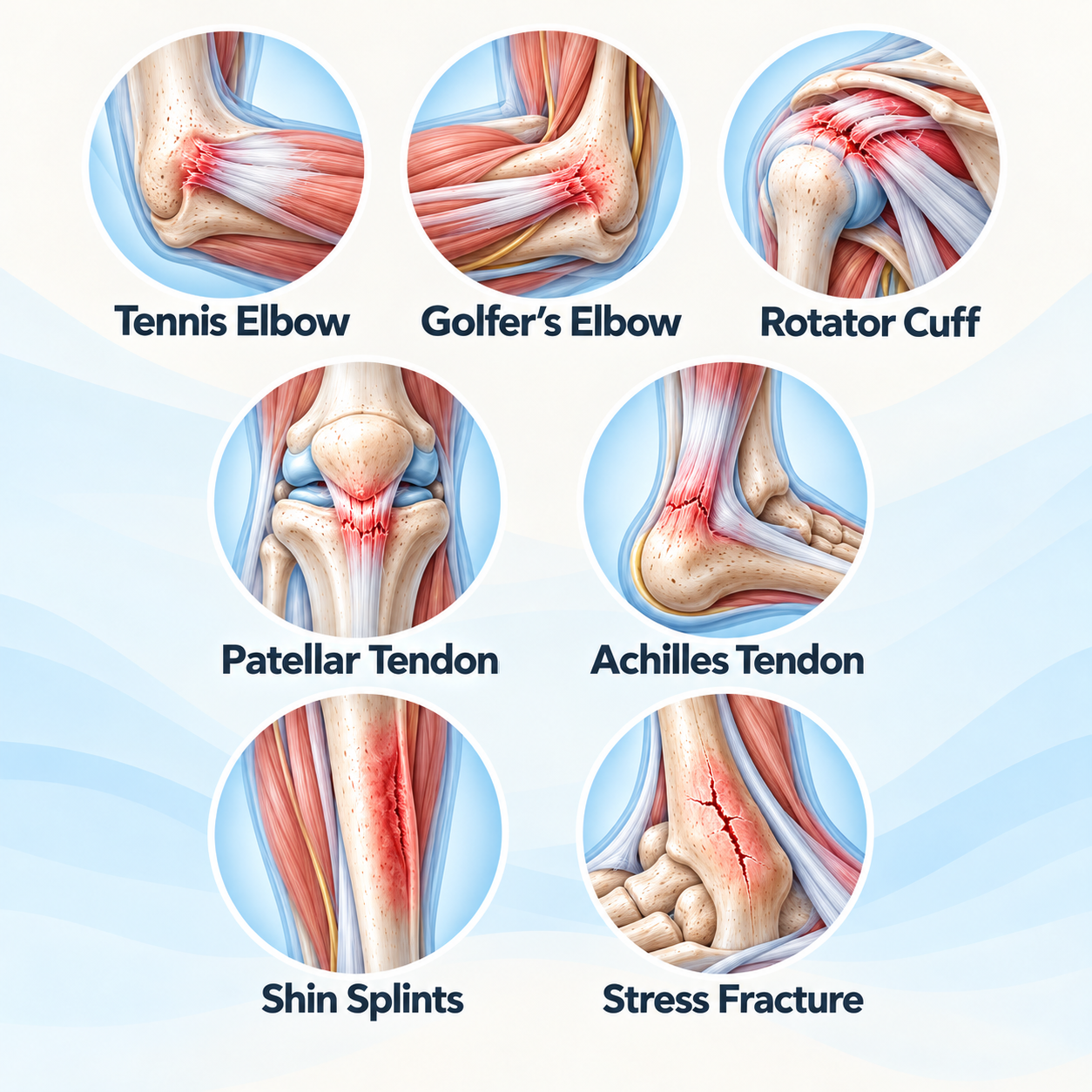
Overuse injuries develop gradually because of repetitive loading without sufficient recovery.
Examples include:
- Tennis elbow.
- Golfer's elbow.
- Patellar tendinopathy.
- Achilles tendinopathy.
- Rotator cuff tendinopathy.
- Shin splints.
- Stress fractures.
These conditions may begin with mild discomfort during activity and gradually progress if contributing factors are not addressed.
Early diagnosis is important because symptoms that appear similar may have different underlying causes and require different treatments.
Common Types of Sports Injuries
Sports injuries can affect several parts of the body. The type of injury often depends on the sport, movement pattern, training intensity and previous injury history.
1. Anterior Cruciate Ligament (ACL) Injuries
The anterior cruciate ligament helps stabilise the knee during twisting, pivoting and changes in direction.
An ACL injury commonly occurs during football, basketball, badminton or other sports involving sudden directional changes.
Common symptoms include:
- A popping sensation at the time of injury.
- Rapid knee swelling.
- Pain and difficulty continuing activity.
- A feeling that the knee may give way.
- Reduced knee movement.
Treatment depends on the severity of the ligament injury, associated cartilage or meniscus damage, knee stability and activity requirements.
Some patients benefit from structured rehabilitation, while others may be considered for ACL reconstruction surgery.
2. Meniscus Tears
The menisci are cartilage structures inside the knee that help distribute load and support joint stability.
Meniscus tears may occur when the knee twists while the foot remains planted on the ground.
Symptoms may include knee pain, swelling, catching, difficulty squatting or an inability to fully straighten the knee.
Treatment options include physiotherapy, activity modification and, in selected cases, arthroscopic meniscus repair or other surgical treatment.
Preserving meniscal tissue whenever feasible is an important consideration for long-term knee health.
3. Ankle Sprains and Ligament Injuries
Ankle sprains are among the most common sports injuries.
They occur when the ankle twists beyond its normal range of movement, stretching or tearing supporting ligaments.
Patients may develop swelling, bruising, tenderness and difficulty bearing weight.
Mild sprains often improve with functional support and progressive rehabilitation. Severe injuries may require immobilisation, further imaging or specialist management.
Repeated ankle sprains can sometimes result in chronic ankle instability.
4. Shoulder Injuries
The shoulder allows a wide range of movements but is also vulnerable to injury during overhead sports, throwing activities, weight training and falls.
Common shoulder sports injuries include:
- Rotator cuff tears and tendinopathy.
- Shoulder dislocations.
- Labral injuries.
- Shoulder instability.
- Acromioclavicular joint injuries.
Symptoms may include pain while lifting the arm, weakness, reduced movement or a sensation that the shoulder is unstable.
Treatment may involve rehabilitation, strengthening exercises, medication or surgery for selected injuries.
5. Muscle Strains and Tears
Muscle strains occur when muscle fibres are overstretched or torn during physical activity.
Commonly affected muscles include the hamstrings, quadriceps, calf muscles and groin muscles.
Symptoms may include sudden pain, muscle tightness, tenderness, bruising and reduced strength.
Treatment varies according to the extent of the tear and usually includes appropriate load management followed by progressive strengthening and rehabilitation.
6. Tennis Elbow and Golfer's Elbow
These conditions involve painful changes in the tendons around the elbow.
Tennis elbow typically affects the outer side of the elbow, while golfer's elbow affects the inner side.
They can occur during racket sports, golf, gym exercises and repetitive gripping activities.
Treatment generally focuses on adjusting aggravating activities, progressive tendon-loading exercises and managing symptoms.
7. Achilles Tendon Injuries
The Achilles tendon connects the calf muscles to the heel bone.
Running, jumping and sudden acceleration can place considerable stress on this tendon.
Common conditions include Achilles tendinopathy and Achilles tendon rupture.
Symptoms may include pain or stiffness near the heel, swelling, reduced push-off strength or sudden difficulty walking following a rupture.
Treatment depends on whether the problem involves tendon overuse or a partial or complete rupture.
8. Sports-Related Fractures and Stress Fractures
Fractures may occur following direct impact, falls or repeated loading.
Stress fractures are small bone injuries that develop when repetitive stress exceeds the bone's capacity to recover.
They commonly affect the feet, lower legs and other weight-bearing bones.
Persistent, localised bone pain during activity should not be ignored, as continued loading may worsen certain stress fractures.
Common Causes of Sports Injuries
Sports injuries can occur even among well-trained athletes. However, several factors may increase injury risk.
These include:
- Sudden twisting or awkward landing: Common during football, badminton, basketball and jumping activities.
- Training overload: Increasing running distance, lifting weights or exercise intensity too quickly.
- Inadequate recovery: Repeated physical loading without sufficient recovery time.
- Muscle weakness or imbalance: Reduced strength or control can affect joint movement.
- Previous injuries: Incomplete rehabilitation may increase the likelihood of reinjury.
- Poor movement mechanics: Certain landing, cutting or lifting patterns may contribute to injury risk.
- Unsuitable equipment or surfaces: Footwear, playing surfaces and protective equipment can influence injury risk.
- Direct trauma: Falls, collisions and contact injuries may damage bones, ligaments and joints.
Not every sports injury is preventable. Appropriate conditioning, gradual training progression and sufficient recovery can help reduce certain injury risks.
Signs and Symptoms of Sports Injuries
Sports-related pain does not always indicate a serious injury. However, some symptoms require prompt medical attention.
Consult an orthopaedic specialist if you experience:
- Persistent pain during or after physical activity.
- Swelling around a joint.
- Difficulty walking, running or bearing weight.
- Joint instability or repeated giving-way episodes.
- Reduced movement or joint stiffness.
- Weakness following an injury.
- Locking or catching sensations in the knee.
- Recurrent pain after returning to sports.
- Pain that does not improve with appropriate rest and activity modification.
- A popping sensation followed by swelling or loss of function.
Seek urgent medical assessment for obvious deformity, an open injury, loss of circulation or sensation, severe pain with inability to bear weight, or a joint that appears dislocated. A hot, swollen joint accompanied by fever also requires urgent evaluation.
Early assessment can help distinguish minor soft-tissue injuries from fractures, significant ligament tears and other conditions needing specialised treatment.
How Are Sports Injuries Diagnosed?
Accurate diagnosis is the foundation of effective sports injury management.
Dr. Girish Dhanawat evaluates the patient's symptoms, mechanism of injury, medical history and functional limitations to determine which structures may be affected.
Step 1: Medical History and Injury Assessment
The consultation begins by understanding how and when the injury occurred.
Important details include the type of sport, direction of movement, presence of swelling, previous injuries and whether the patient could continue playing.
Step 2: Physical Examination
The affected area is examined for tenderness, swelling, movement restriction and instability.
Depending on the injury, the examination may include ligament stability tests, muscle strength assessment, joint movement testing and evaluation of walking patterns.
Step 3: Imaging Investigations
Imaging is recommended when clinically appropriate.
- X-rays: Help identify fractures, dislocations and certain bone or joint abnormalities.
- MRI scans: May help evaluate ligament tears, meniscus injuries, cartilage damage, muscle injuries and other soft-tissue conditions.
- Ultrasound: Can assist in assessing selected muscle, tendon and ligament injuries.
- CT scans: May be recommended for complex fractures or specific bone injuries.
Not every sports injury requires an MRI. The choice of investigation depends on clinical findings and whether imaging is likely to influence treatment decisions.
Step 4: Functional Assessment
Functional assessment considers how the injury affects walking, balance, strength, joint control and sport-specific movements.
These findings help guide rehabilitation planning and decisions about safely returning to physical activity.
Sports Injury Treatment Options in Thane
Treatment depends on the injured structure, severity, functional limitations and patient goals.
Not all sports injuries require surgery. Many respond well to appropriately planned non-surgical treatment.
1. Initial Injury Management
During the early phase, treatment may include:
- Temporary protection of the injured area.
- Reducing activities that worsen pain.
- Ice for short-term symptom relief when appropriate.
- Compression to manage swelling.
- Elevation of the injured limb.
- Braces, supports or walking aids when indicated.
Prolonged complete rest is not always beneficial. Safe, progressive movement is often introduced as the injury allows.
2. Medication and Pain Management
Suitable medications may be prescribed to manage pain and inflammation.
Medication selection depends on the patient's age, medical history, other medicines and the type of injury.
Pain relief is generally combined with measures that address the underlying injury rather than used as the only treatment.
3. Physiotherapy and Rehabilitation
Physiotherapy is an important component of sports injury recovery.
A rehabilitation programme may focus on:
- Restoring joint movement.
- Improving muscle strength.
- Developing balance and coordination.
- Improving joint stability.
- Correcting functional movement limitations.
- Progressively rebuilding activity tolerance.
- Preparing the patient for a safe return to sports.
The rehabilitation programme should be adjusted according to clinical progress rather than following the same schedule for every patient.
4. Bracing and Joint Support
Knee braces, ankle supports, splints and other devices may be useful for certain injuries.
They can provide temporary protection, limit potentially harmful movement or support functional rehabilitation.
The type and duration of support depend on the diagnosis.
5. Injection-Based Treatments
Selected musculoskeletal conditions may be considered for injection-based treatment after clinical evaluation.
The suitability of an injection depends on the specific diagnosis, available evidence and potential risks.
Injections do not automatically repair torn ligaments or tendons, and they should not replace appropriate rehabilitation or indicated surgery.
6. Surgical Treatment for Sports Injuries
Surgery may be considered when an injury causes significant instability, structural damage or persistent functional limitations despite appropriate conservative care.
Depending on the condition, possible surgical procedures include:
- ACL reconstruction.
- Meniscus repair or selected meniscus procedures.
- Arthroscopic knee surgery.
- Shoulder stabilisation procedures.
- Tendon repair.
- Fracture fixation.
- Other ligament reconstruction procedures.
The need for surgery is determined individually.
Arthroscopic Surgery for Sports Injuries
Arthroscopy is a minimally invasive surgical technique used to diagnose and treat certain conditions inside joints.
During arthroscopy, a small camera called an arthroscope is inserted through a small incision. The camera displays the joint structures on a monitor, allowing the surgeon to inspect and treat appropriate injuries using specialised instruments.
Arthroscopy is commonly used for selected knee and shoulder conditions.
Potential advantages in suitable cases include smaller incisions, reduced disruption to surrounding tissues and targeted treatment of damaged structures.
However, arthroscopy is not necessary or beneficial for every sports injury.
The decision to recommend an arthroscopic procedure depends on the diagnosis, symptoms, clinical findings and available treatment alternatives.
Non-Surgical vs Surgical Treatment for Sports Injuries
The choice between conservative treatment and surgery depends on the severity of the injury and the functional requirements of the patient.
| Feature | Non-Surgical Treatment | Surgical Treatment |
|---|---|---|
| Main approach | Rehabilitation, medication and activity modification | Repair or reconstruction of selected damaged structures |
| Suitable injuries | Many mild to moderate injuries and selected significant injuries | Certain unstable, displaced or structurally severe injuries |
| Hospitalisation | Usually not required | May require hospitalisation or day-care surgery |
| Rehabilitation | Important for recovery | Essential after most procedures |
| Recovery | Depends on tissue healing and functional progress | Depends on surgery and postoperative rehabilitation |
| Return to sports | Based on strength, movement and function | Based on healing, rehabilitation and functional testing |
Surgery is not automatically the faster route to recovery. Some patients with significant ligament injuries can manage well without surgery, while certain structural injuries benefit from operative treatment.
Recovery After a Sports Injury
Recovery time depends on the injured tissue, injury severity, treatment method, patient health and rehabilitation progress.
Phase 1: Initial Injury Management
The first phase focuses on protecting the injured structure, managing swelling, controlling discomfort and maintaining safe movement.
Phase 2: Restoring Movement
As symptoms improve, rehabilitation focuses on recovering joint mobility and reducing stiffness.
Exercises are selected according to the injury and healing stage.
Phase 3: Strength and Stability Training
Progressive resistance exercises help improve muscle strength, joint stability, balance and movement control.
Phase 4: Sport-Specific Rehabilitation
Patients gradually reintroduce activities relevant to their sport.
These may include running, jumping, changing direction, agility exercises and controlled sport-specific drills.
Phase 5: Return to Sports
Returning to sports depends on more than the number of weeks since injury.
Important considerations include adequate healing, restored movement, strength, balance, functional performance and confidence.
For certain significant injuries, such as ACL reconstruction, return to pivoting sports may require nine months or longer and should be guided by rehabilitation milestones and clinical testing rather than time alone.
Returning too early can increase the risk of reinjury.
How Can Sports Injuries Be Prevented?
Although every injury cannot be prevented, several measures can reduce avoidable risks.
Maintain Appropriate Strength and Conditioning
Regular strengthening of the muscles supporting the knees, hips, ankles, shoulders and trunk can improve movement control.
Include a Structured Warm-Up
A dynamic warm-up prepares the body for physical activity.
Sport-specific programmes that include balance, strength and landing techniques can reduce some lower-limb injury risks.
Increase Training Gradually
Sudden increases in exercise intensity, duration or frequency can overload tissues.
Training progression should match the individual's conditioning and recovery.
Prioritise Recovery
Adequate sleep, appropriate nutrition, hydration and planned recovery periods support physical performance and tissue adaptation.
Use Appropriate Footwear and Equipment
Suitable footwear and protective equipment can help manage demands associated with different sporting activities.
Rehabilitate Previous Injuries
An injured joint may remain vulnerable if strength, balance and functional control have not been adequately restored.
Completing rehabilitation before returning to demanding sports activities is important.
When Should You Consult a Sports Injury Specialist?
An orthopaedic consultation may be appropriate when:
- Pain or swelling persists after a sporting injury.
- A knee or ankle repeatedly gives way.
- You cannot return to your usual exercise routine.
- A shoulder feels unstable or repeatedly dislocates.
- A suspected ligament or meniscus injury affects daily movement.
- You experience recurring injuries in the same area.
- Physiotherapy or initial treatment has not produced sufficient improvement.
- You need assessment before returning to competitive sports.
The aim of consultation is not simply to relieve pain but to identify the underlying injury and select treatment that supports long-term joint function.
What Is the Cost of Sports Injury Treatment in Thane?
The cost of sports injury treatment in Thane varies according to the type and severity of the injury, required investigations and selected treatment.
Factors influencing treatment costs include:
- Orthopaedic consultation and clinical assessment.
- X-rays, MRI or other diagnostic investigations.
- Medications, braces or supports.
- Physiotherapy and rehabilitation sessions.
- Type of ligament, tendon or joint injury.
- Whether surgical treatment is necessary.
- Surgical technique and implant or fixation requirements.
- Hospitalisation and operating theatre charges.
- Follow-up consultations.
- Health insurance coverage.
Minor injuries managed conservatively generally have different costs from complex ligament reconstruction or fracture surgery.
A personalised estimate can be discussed after the injury has been evaluated and a treatment plan established.
Patients considering surgery should also confirm hospital package inclusions, rehabilitation costs and insurance eligibility.
Why Consult Dr. Girish Dhanawat for Sports Injury Treatment in Thane?
Orthopaedic Expertise
Dr. Girish Dhanawat, MBBS, D. Ortho., is an Orthopedic Surgeon and Joint Replacement Specialist in Thane who provides assessment and management of orthopaedic and musculoskeletal conditions.
Diagnosis-Based Treatment Planning
Sports-related pain can arise from ligament damage, muscle strain, cartilage injuries, tendon conditions or fractures.
Identifying the affected structure helps guide appropriate treatment and avoid unnecessary interventions.
Individualised Treatment Recommendations
A professional athlete, recreational runner and older adult who enjoys walking may have different physical demands and treatment goals.
Treatment planning takes these individual needs into consideration.
Conservative Treatment When Appropriate
Many musculoskeletal injuries improve with structured rehabilitation and activity modification.
Non-surgical options are considered where clinically appropriate.
Rehabilitation and Functional Recovery
Recovery involves more than reducing pain.
Restoring mobility, joint stability, strength and functional confidence is important for returning to everyday activities and sports.
Patient-Centred Communication
Clear discussion of diagnosis, available treatments, potential risks and expected recovery helps patients make informed decisions about their care.
Frequently Asked Questions About Sports Injury Treatment in Thane
Which doctor should I consult for a sports injury?
An orthopaedic doctor can evaluate sports injuries involving bones, joints, muscles, tendons and ligaments. The appropriate specialist depends on the type and severity of the injury. Patients in Thane can consult Dr. Girish Dhanawat for orthopaedic assessment.
What are the most common sports injuries?
Common sports injuries include ankle sprains, ACL injuries, meniscus tears, hamstring strains, shoulder injuries, tennis elbow, Achilles tendon injuries and stress fractures.
Can sports injuries heal without surgery?
Yes. Many sports injuries recover with appropriate protection, progressive rehabilitation, physiotherapy and activity modification. Surgery may be considered for selected severe injuries or persistent functional instability.
How do I know if my knee ligament is torn?
Possible symptoms include a popping sensation, swelling, pain, difficulty walking and knee instability. Clinical examination and, when necessary, MRI can help establish the diagnosis.
Does every ACL tear require surgery?
No. Treatment depends on knee stability, associated injuries, activity demands and individual goals. Some patients manage well with structured rehabilitation, while others may benefit from ACL reconstruction.
What is the difference between a ligament tear and a muscle tear?
Ligaments connect bones and help stabilise joints. Muscles produce movement, and strains involve muscle fibres or their tendon attachments. Treatment and recovery depend on the injured tissue and severity.
How long does a sports injury take to heal?
Recovery varies considerably. Mild sprains or strains may improve over several weeks, while significant ligament, tendon or bone injuries may require months of recovery and rehabilitation.
When should I get an MRI for a sports injury?
MRI may be recommended when examination suggests a significant soft-tissue injury, symptoms persist, the diagnosis remains uncertain or imaging is needed for treatment planning. Not every injury requires MRI.
What is arthroscopic sports injury surgery?
Arthroscopy is a minimally invasive technique that uses a small camera and specialised instruments to treat selected conditions inside joints, such as certain meniscus and ligament injuries.
Can I play sports after ACL reconstruction?
Many patients return to sports after ACL reconstruction and appropriate rehabilitation. Return depends on healing, strength, knee stability, functional testing and the demands of the sport.
Is physiotherapy necessary after a sports injury?
Physiotherapy is beneficial for many sports injuries. Rehabilitation helps restore movement, strength, balance and functional ability. The specific programme depends on the injury.
Can untreated sports injuries cause long-term problems?
Some untreated or inadequately rehabilitated injuries may result in persistent pain, recurrent instability, weakness or further joint damage. The risk depends on the type and severity of the injury.
What should I do immediately after a sports injury?
Stop the activity, protect the injured area and avoid movements that increase pain. Short-term cooling and compression may help some injuries. Seek urgent evaluation for deformity, severe pain, numbness or inability to bear weight.
How can I prevent recurrent sports injuries?
Appropriate strengthening, balance training, progressive conditioning, sufficient recovery and completion of rehabilitation can help reduce the risk of recurrent injuries.
Where can I consult an orthopaedic doctor for sports injuries in Thane?
Patients can consult Dr. Girish Dhanawat, Orthopedic Surgeon and Joint Replacement Specialist, in Naupada, Thane West, for evaluation of sports-related knee, shoulder, ankle and other musculoskeletal injuries.
Consult Dr. Girish Dhanawat for Sports Injury Treatment in Thane
Dr. Girish Dhanawat provides personalised sports injury consultations in Thane to assess your injury and discuss suitable treatment.
Get guidance on rehabilitation and a safe return to daily activities and sports.
Dr. Girish Dhanawat, MBBS, D. Ortho.
Orthopedic Surgeon & Joint Replacement Specialist in Thane
Clinic Address: 1st Floor, Office No. 5, Lokmanya Co-Operative Housing Society, 6, Veer Savarkar Marg, Near Gajanan Maharaj Mandir, Naupada, Thane West, Maharashtra – 400602.
Contact: +91 9004700318
Schedule Your Sports Injury Consultation